



Outreach Strategies
Neuma Church Used VisitorReach to Successfully Launch in South Bay
We assess budgets. We assess attendance. We assess staff, systems, and ministries. We regularly evaluate the health of our church. But how often do we assess ourselves? We preach the Gospel, love the Church, believe in the Great Commission, and sincerely want to reach people far from God. Yet if we are honest, many of us have not slowed down long enough to ask a very important question: How healthy is my personal evangelism, really?


.webp)
By Marc Estes
We assess budgets. We assess attendance. We assess staff, systems, and ministries.
We regularly evaluate the health of our church. But how often do we assess ourselves?
We preach the Gospel, love the Church, believe in the Great Commission, and sincerely want to reach people far from God. Yet if we are honest, many of us have not slowed down long enough to ask a very important question:
How healthy is my personal evangelism, really?
That question is more important than many of us realize. Because it is possible to love the idea of evangelism while not living a lifestyle of evangelism. It is possible to champion outreach publicly while drifting personally. It is possible to care deeply, and still not be consistently effective.
And that is why assessment matters.
It gives us the clarity to see where we are and the opportunity to realign ourselves with the mission that should shape our lives.
Jesus was not vague about why He came.
He came to seek and save the lost (Luke 19:10).
That was not a side theme in His ministry. That was His mission. He moved toward broken people. He made room for people others avoided. He loved, served, called, and rescued those far from God. And if I am going to call myself His follower, then I must keep asking whether my life is moving in the same direction.
This is where evangelism health becomes personal.
Because if His mission was to seek and save the lost, then I have to ask whether my life is aligned with that mission or merely applauding it from a distance.
Lifeway Research found that while many Christians say they are willing to talk about faith only:
That should make us pause and realize that a heart for the lost does not equate to a healthy evangelism lifestyle.
One of the traps leaders can fall into is assuming that because we care, we are healthy.
A burden for the lost is important. But a burden must become behavior. Conviction must become practice. Desire must become discipline.
That is why I believe every pastor and leader should periodically assess their evangelism health. We assess budgets. We assess attendance. We assess systems. We assess staff. We assess ministries.
Why would we not assess something this important?
If reaching people is central to the heart of God and central to the mission of the Church, then it should be central to the honest evaluation of my own life.
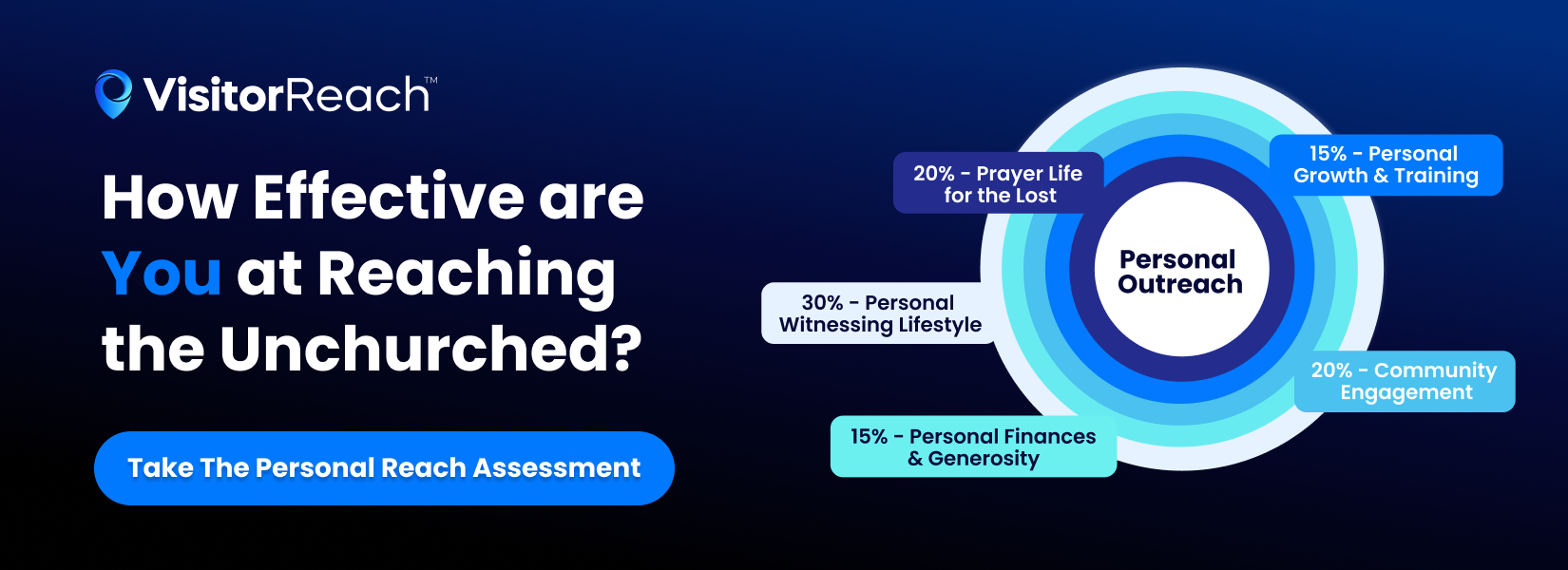
One of the reasons I am so passionate about the free REACH Assessments is that they help leaders assess evangelism in practical, measurable, personal ways. They focus on five areas that reveal whether evangelism is truly woven into everyday life.
Let me frame those areas as five honest questions.
This is about rhythm.
Do I regularly initiate relationships with people far from God? Do I look for opportunities to share my story? Do I invite? Do I engage? Do I move toward people intentionally?
Many leaders are not opposed to witnessing. They are just inconsistent. But healthy evangelism is not random. It is relational, intentional, and ongoing.
This question cuts deep.
Who am I praying for by name right now? Whose salvation am I carrying before the Lord? Where am I asking God for open doors, softened hearts, divine appointments, and laborers for the harvest?
Prayer is not a minor part of evangelism. Prayer is one of the great engines of it. If my prayer life has little room for the lost, then something in my alignment needs attention.
It is very difficult to reach people you rarely encounter.
Am I present where people live, work, hurt, gather, and search? Do I know my neighbors? Am I involved beyond church walls? Am I creating margin to be in the lives of people who need Jesus?
Too many leaders spend all their time around saved people while asking God to help them reach lost people. Community engagement matters because proximity matters.
Some leaders care deeply but feel rusty. Others still love the mission but have lost confidence. Others have slowly allowed administration, meetings, pressure, and maintenance to crowd out personal growth.
Am I still being trained? Am I still sharpening my ability to share the Gospel clearly? Am I learning? Am I stretching? Am I growing in wisdom, compassion, discernment, and boldness?
Healthy leaders keep growing.
This is not always the first area people think about, but it matters greatly.
What do my finances reveal about what I truly value? Do I invest in the mission? Do I make room for generosity, hospitality, outreach, and Kingdom advancement? Is reaching people reflected not only in my words, but also in my stewardship?
Jesus was clear that where our treasure is, our heart will be also. Generosity is not separate from mission. It is one of the ways the mission becomes visible.
How do you score?
Not your team, church, outreach pastor or assimilation system.
You.
If reaching people is one of the primary reasons we are here, then would it not make sense to honestly evaluate how we are doing?
Too often, we assume we are healthier than we are simply because we still care. But assessment gives us clarity. It helps us identify what is strong, what is weak, and where we need to re-engage.
Sometimes the most spiritual thing a leader can do is stop pretending and start measuring.
That is exactly why I want to encourage you to take the free Personal REACH Assessment.
Take it personally. Take it prayerfully. Take it honestly.
Let it show you where your evangelism life is strong. Let it reveal where you may have drifted. Let it help you move from vague burden to practical action.
Because if this is indeed one of the primary reasons we exist, then it makes perfect sense to assess how we are doing.
If this message resonates with you, I would also love for you to check out my new book, The Road We Must Travel Again. It is a call for the Church to return to mercy-driven evangelism, compassionate engagement, and the mission we must not forget.
Footnotes and Sources
1. Lifeway Research, “Christians Say They’re Seeking but not Having Evangelistic Conversations,” May 24, 2022. Available at research.lifeway.com.
2. Amazon listing for The Road We Must Travel Again.
Create 100+ monthly connections with people in your area, have meaningful SMS conversations, and watch new visitors walk through your doors — All through the VisitorReach App!


.webp)
.webp)